Why 100% "Degradable" Cosmetic Tubes Fail Compatibility Testing: A Technical Assessment and the Case for Bio-Based PE Circularity
Why 100% "Degradable" Cosmetic Tubes Fail Compatibility Testing: A Technical Assessment and the Case for Bio-Based PE Circularity
Executive Summary: Sustainable packaging must balance end-of-life claims with formula compatibility, barrier performance, and circularity.
1. Executive Summary & Industry Reality Check
100% biodegradable PLA/PBAT tubes can fail in water-based creams because ester-rich polymers absorb moisture and hydrolyze. Water activity, elevated temperature, and emulsifier exposure accelerate hydrolytic softening, micro-porosity, and seepage.
2. Chemical Instability Mechanisms
- Hydrolytic cleavage: water attacks ester bonds, reducing molecular weight and wall strength.
- Ultrasonic end-seal cracking: narrow crystallization windows create brittle crimp zones and drop-test failures.
- High WVTR: PLA may reach 25–40 g/m²·24h versus approximately 2.5 g/m²·24h for PE, causing formula water loss and active concentration shifts.
3. Cradle-to-Gate LCA & Carbon Capture Metrics
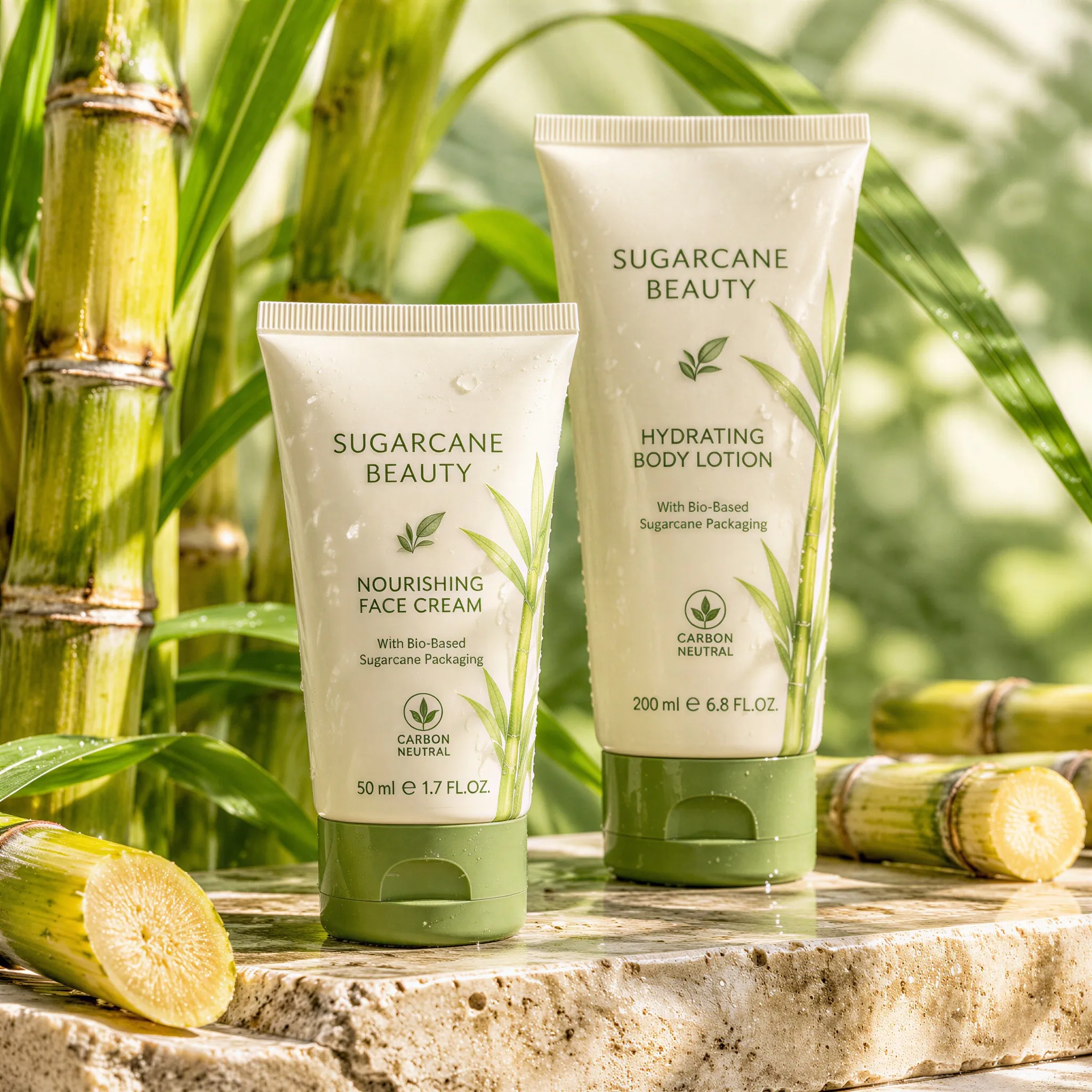
Sugarcane Bio-PE captures biogenic carbon during cultivation. Cradle-to-gate LCA aligned with ISO 14040/14044 reports net carbon fixation of −2.15 to −3.09 tonnes CO₂ per tonne of resin, while preserving drop-in PE processing and recycling routes.
4. Engineering Properties Matrix
| Metric | Sugarcane Bio-PE | Engineering meaning |
|---|---|---|
| Density | 0.922–0.954 g/cm³ | Lightweight, PE-compatible structure |
| Melt flow rate | 2.2–4.8 g/10 min | Supports extrusion and co-extrusion |
| Recycling code | #2 HDPE / #4 LDPE | Drop-in circularity within PE streams |
5. Five-Layer Co-Extrusion Architecture
A typical five-layer tube uses Bio-PE outer and inner skins, tie layers, and a central EVOH barrier. This architecture combines squeezability, seal integrity, low WVTR, and oxygen protection for retinol, vitamin C, SPF, and emulsions.

6. Structured FAQ
- Q: Is Bio-PE biodegradable?
- A: No. It is a renewable, drop-in PE designed for mechanical recycling and circularity rather than uncontrolled biodegradation.
- Q: How is the bio-content verified?
- A: Carbon-14 isotope testing under ASTM D6866 distinguishes modern biogenic carbon from fossil carbon.
- Q: Can it run on existing tube lines?
- A: Yes, grades are engineered as drop-in replacement PE for conventional extrusion and sealing equipment.
Procurement note: Validate each formulation with accelerated compatibility, seal, WVTR, OTR, and drop testing before commercialization.
The $0.02 Quality Insurance: Why Glass Bottles Must Be Cleaned Before Spray Coating