The $0.02 Quality Insurance: Why Glass Bottles Must Be Cleaned Before Spray Coating

The Illusion of "Clean" Glass
In cosmetic packaging procurement, few discussions cause more friction between brand buyers and factory engineers than pre-treatment surcharges:
"These glass bottles are fresh from the mold and sealed in partition cartons. Why is there an additional cleaning fee before spray coating?"
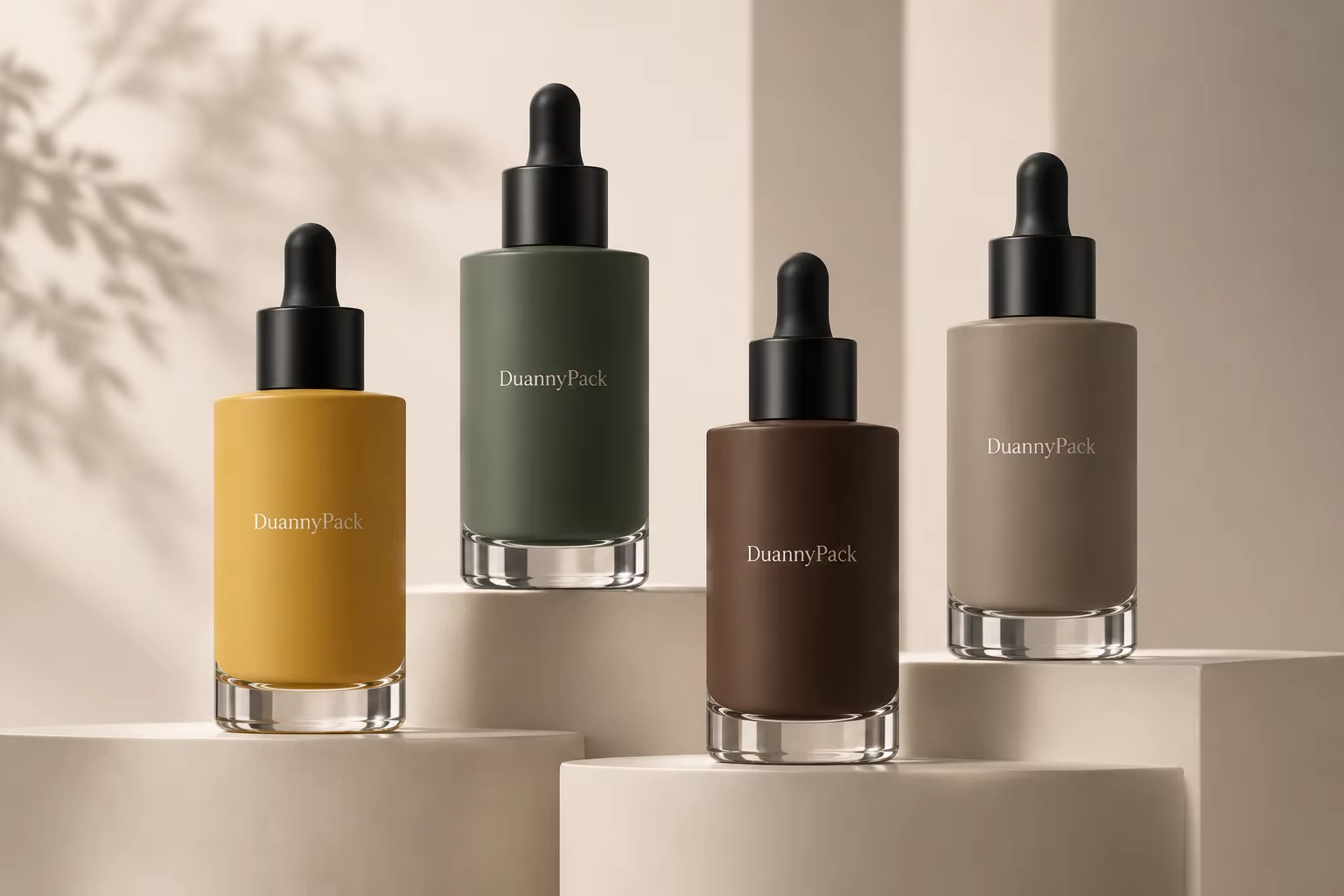
On the surface, new glass appears pristine, transparent, and dust-free. But in industrial coating, optical transparency does not equal chemical cleanliness. Skipping surface pre-treatment to save a fraction of a cent is one of the leading root causes of catastrophic batch failures—including paint peeling, surface clouding, and fisheye craters.
1. The Invisible Culprits: Cold-End Coatings and Mold Lubricants
To understand why glass needs washing, you have to look at how hollow glass containers are manufactured:
- Graphite Mold Release Agents: During the forming cycle, molds are lubricated with graphite-oil compounds. High-temperature residues inevitably transfer to the glass skin.
- Cold-End Protective Coatings: When bottles exit the annealing lehr (100°C–150°C), a fine mist of polyethylene wax or modified silicone emulsion is sprayed over them to prevent scratching and shattering during high-speed conveying.
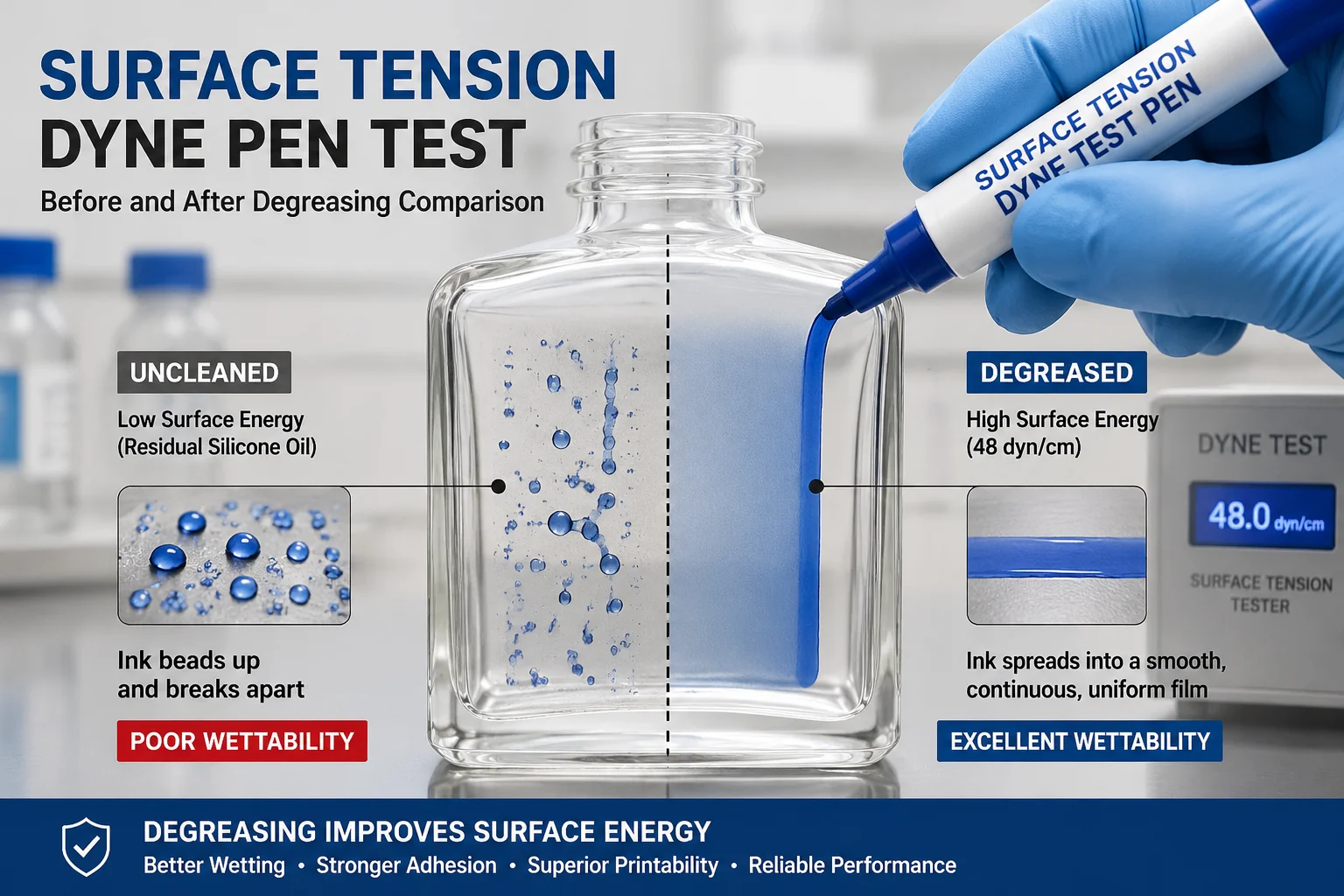
While cold-end coating protects bottles during transport, it creates an ultra-low surface energy layer (typically ≤ 32 dyn/cm). High-performance decorative coatings require a surface tension of ≥ 48 dyn/cm to wet out, spread, and form strong chemical bonds.
2. The Color Paradox: Why White Bottles Suffer More Than Black
Factory technicians often say: "Dark colors can skip washing, but white and light colors cannot."
While technically an oversimplification, there is an empirical reason for this:
- White & Light Pastels: Extremely low visual tolerance. Micro-oil spots cause uneven surface tension, creating translucent rings, pinholes, and color mottling.
- Dark Hues (Black, Dark Brown, Forest Green): High opacity visually masks microscopic craters, but cross-hatch adhesion remains compromised without proper pre-treatment.
3. Comparing the 3 Pre-Treatment Methods
- Tier 1: High-Pressure Air Ionizer + Mechanical Brushing: Removes physical cardboard dust and environmental particulates only; zero chemical degreasing.
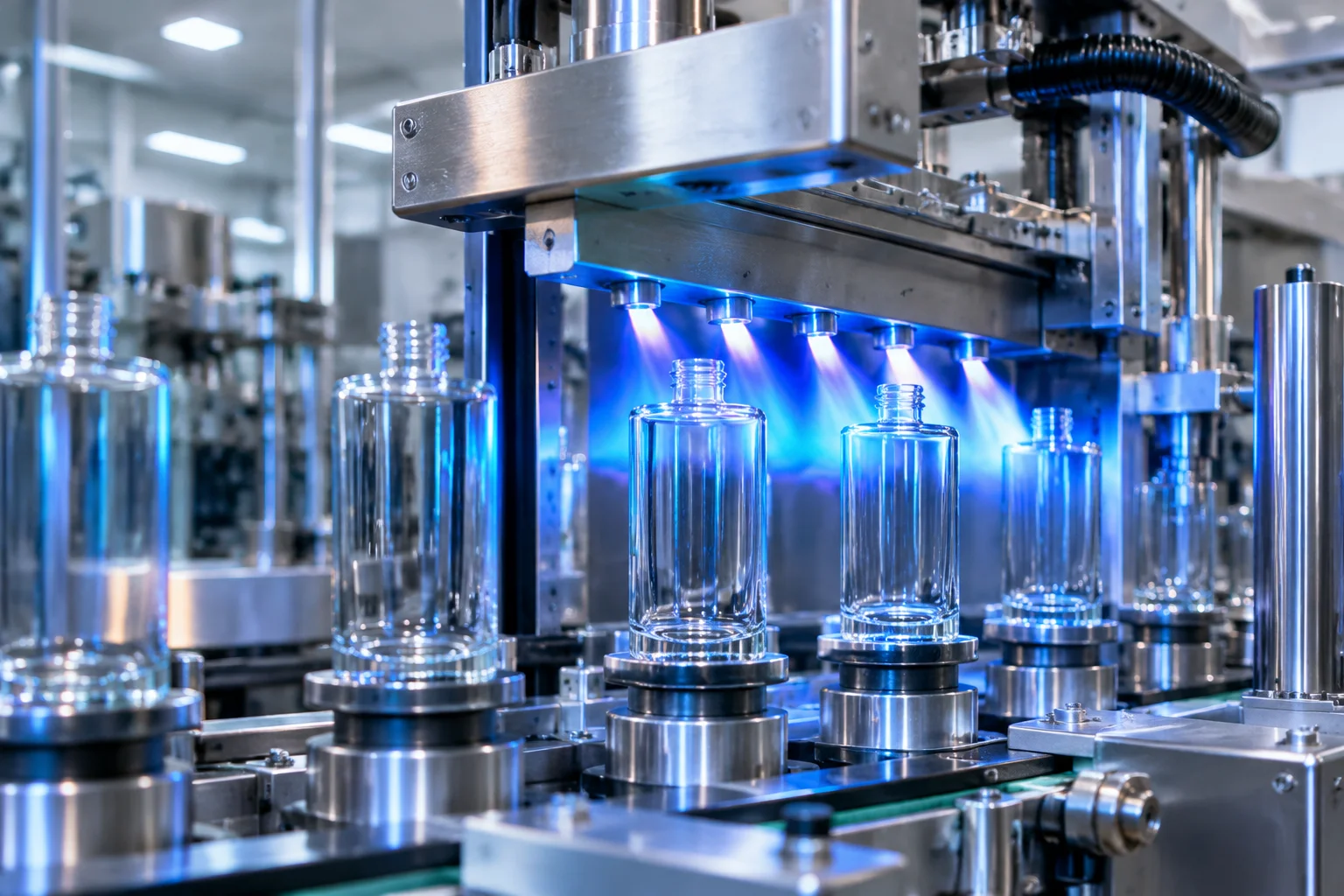
- Tier 2: Inline Flame / Plasma Treatment: Precision micro-flame pyrolyzes and oxidizes organic wax/silicone residues within 1 second, instantly boosting surface wettability to ≥ 52 dyn/cm. Excellent cost-performance ratio.
- Tier 3: Multi-Stage Aqueous Ultrasonic Degreasing: Alkaline wash → DI pure water rinse → hot air tunnel drying. The gold standard for pristine optical-grade finishes and luxury white coatings.
4. Supplier Quality Checklist (QC Standards)
- Dyne Pen Wettability Test: Apply 44 or 48 dyn/cm test ink across the bottle body. Continuous liquid wetting indicates proper degreasing; immediate beading indicates oil contamination.
- Cross-Hatch Adhesion Test (ASTM D3359 / ISO 2409): Cut a 1mm x 1mm lattice grid through the cured paint film. Apply 3M #600/#610 tape and pull off sharply at 90°. Acceptance criteria: Grade 4B or 5B (less than 5% flaking).
- Internal Cleanliness: Ensure bottle mouths are sealed with dedicated silicone masking plugs during exterior spray coating.
Conclusion: Engineering Predictability with DuannyPack
In beauty and personal care packaging, a bottle that sheds its color destroys brand equity. At DuannyPack, we integrate automated flame pre-treatment, multi-stage ultrasonic degreasing, and strict ASTM D3359 cross-hatch quality protocols into every production batch to guarantee zero-defect surface finishes.
Planning your next custom color packaging run? Contact the DuannyPack engineering team to review your finish specifications, dyne requirements, and automated coating workflows.
PCR Packaging in 2026: From Claim to Specification