Cosmetic Packaging Trends 2027: Seven Formats Beauty Brands Are Specifying
Last updated: 8 November 2026 · Reading time: about 9 minutes
Cosmetic packaging decisions in 2027 are being made on two axes at once: formulation protection and regulatory proof. Regulation (EU) 2025/40 — the Packaging and Packaging Waste Regulation, or PPWR — has applied across EU member states since August 2026, and its first hard market restrictions land in January 2030. For brands selling into Europe, the pack is no longer a marketing object chosen at the end of development. It is a compliance document with a decoration budget.
This article sets out the seven formats gaining share in 2027, the PPWR deadlines that explain why, and the specification questions that separate a pack that survives 2030 from one that has to be re-tooled.
Quick answer: what is changing in cosmetic packaging for 2027
- Airless is now the default for actives — serums, retinoids, vitamin C, preservative-reduced formulas — not a premium upgrade.
- Refill and mono-material designs move from sustainability reports into mainstream line extensions, because PPWR recyclability grading rewards single-material construction.
- Post-consumer recycled (PCR) content becomes a specification with paperwork: minimum thresholds phase in from 2030, calculated per packaging format and per plant.
- Dual-chamber packs grow with A/B actives and two-texture products that cannot be pre-mixed.
- Heavy-wall glass and gel-system packaging hold the premium and nail-beauty ends, where perceived weight still sells.
If you read only one line: the winning 2027 pack is a single-material container, refillable or recyclable at scale, with documented recycled content and a decoration route that does not weld two materials together.
1. The rule change behind every other trend: PPWR is live
The PPWR replaced Directive 94/62/EC and applies directly in every member state, without national transposition. It covers primary, secondary and transport packaging, whether produced inside the EU or imported. Obligations run along the whole chain — converter, importer, brand owner, distributor — which is why packaging specifications now arrive with documentation requests attached.
PPWR timeline for cosmetic packaging
| Date | Requirement | What it changes on the shelf |
|---|---|---|
| August 2026 | Regulation applies in full across the EU | Documentation, declarations of conformity and technical files become standard purchasing requirements |
| 2028–2029 | Harmonised EU labelling | Material and disposal pictograms on pack and closure; artwork dielines need reserved space |
| 1 January 2030 | Only recyclability grades A–C may be placed on the market; recycled-content minimums start; packaging minimisation rules apply | Multi-material pumps, metallised sleeves, decorative double walls and oversized secondary packaging come under review |
| 1 January 2035 | Recyclability must be demonstrated “in practice and at scale” | Laboratory recyclability is no longer enough; collection and sorting reality counts |
| 1 January 2038 | Only grades A and B remain permitted | Grade C packaging is phased out; format choice made in 2027 decides whether a SKU survives |
Alongside recyclability, the PPWR sets minimum post-consumer recycled content for plastic packaging. The percentages are calculated by packaging type and format, as an annual average per manufacturing plant — not as a company-wide blend.
| Plastic packaging category | From 2030 | From 2040 |
|---|---|---|
| Contact-sensitive PET (excluding single-use beverage bottles) | 30% | 50% |
| Other contact-sensitive plastic | 10% | 25% |
| Single-use plastic beverage bottles | 30% | 65% |
| Other plastic packaging | 35% | 65% |
First targets apply from 1 January 2030, or three years after the implementing act under Article 7(8), whichever is later. Confirm the applicable category with your compliance team before fixing a recycled-content figure in a purchase order.
Three practical consequences for packaging specifications
- Ask for a recyclability grade, not a recyclability claim. “Recyclable” without a grade and a material declaration is not a purchasing document.
- Decoration is now a design-for-recycling decision. Direct printing keeps a mono-material stream clean; metallised shrink sleeves and full-wrap multi-material labels can push a pack down a grade.
- Minimisation rules hit decorative structure. False bottoms, non-functional double walls and excessive void space are explicitly targeted — the acrylic “thick wall” look needs a functional justification, or a heavy-wall PET alternative that delivers the same visual weight with less material.
2. Airless becomes the default for actives
An airless pack dispenses product without letting air back into the chamber. The piston follows the formula, so the contents stay in contact with neither oxygen nor the user’s fingers. For brands formulating with retinoids, vitamin C, peptides or reduced preservative systems, that is a functional requirement rather than a premium cue — and it is why 15–50 ml airless formats have replaced dropper bottles across much of the serum category.
Four airless constructions cover most briefs:
- PP airless bottles — the workhorse for 15–50 ml serums and emulsions; opaque, lightweight, strong PCR availability.
- AS airless bottles — clearer, glossier wall for brands that want to show a formula tint or a floating design element.
- Airless jars — for creams and gel-creams where a pump would shear the texture.
- Airless tubes with EVOH barrier — for high-viscosity and oxidation-sensitive formulas, including applicator formats.
Specification checkpoints: dose per stroke, evacuation rate at end of life, whether the pump can be supplied in an all-plastic version for a cleaner recyclability grade, and whether the actuator geometry matches the fill weight you are actually selling.
3. Refill and mono-material: from story to structure
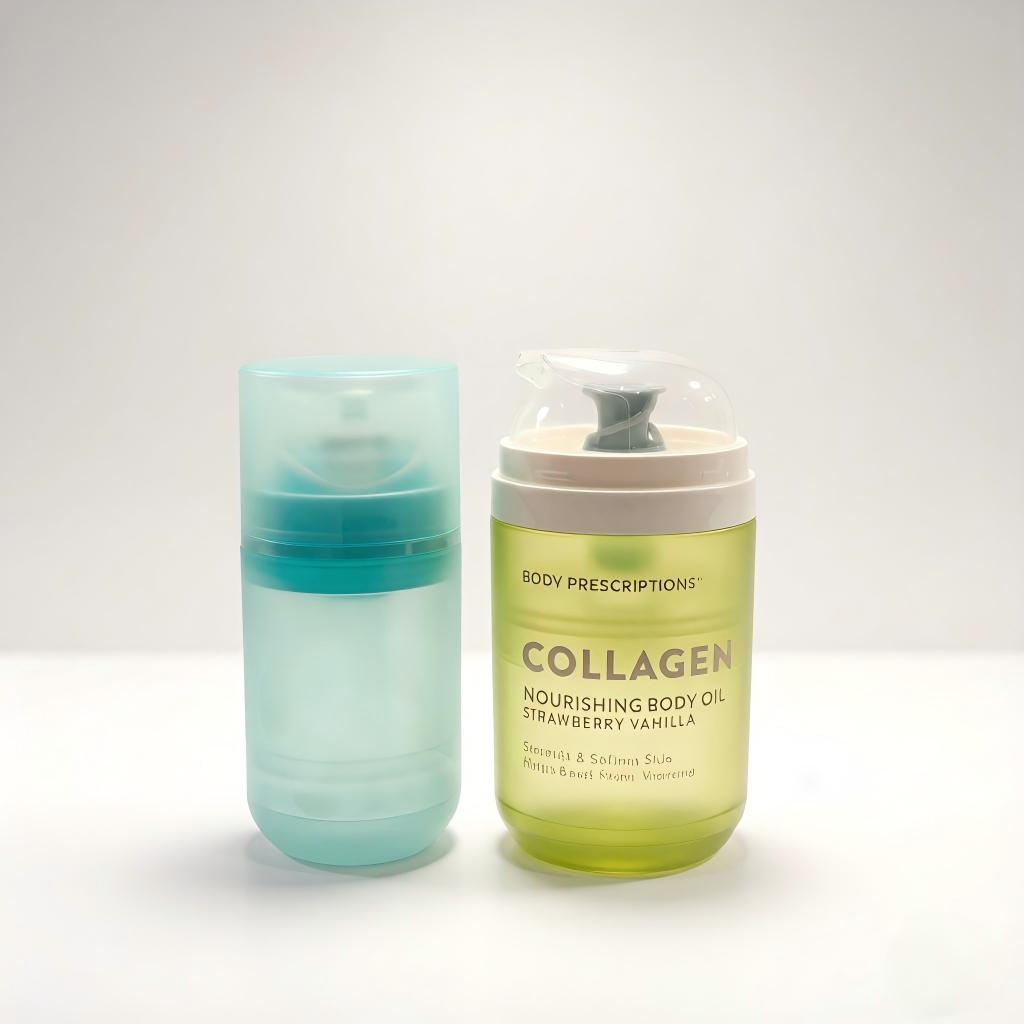
Refill is the cheapest carbon reduction available to a packaging team, and the PPWR reinforces it: operators offering refill must inform consumers about suitable container types, hygiene standards and safety rules, and from 2030 large retailers are expected to dedicate sales area to refill stations. For a beauty brand, the practical translation is a durable outer container plus a thin-wall refill inner — typically a PP refill bottle that snaps or screws into a decorated shell.
Mono-material thinking matters just as much. A PP bottle with a PP pump and PP cap sits in one recycling stream; the same bottle with a metallised ABS collar and a POM-heavy pump does not. When a formula allows, specify the closure and the container in the same polymer family and keep the decoration to direct print.
4. PCR content with paperwork attached
Recycled content is moving from a marketing claim to a line item with a certificate behind it. Because PPWR thresholds are calculated per format and per plant, a supplier must be able to state the recycled percentage of a specific mould, not of a general material family. Expect to see mass-balance documentation (for example ISCC PLUS) or scheme-based certification such as RecyClass alongside the material declaration.
Practical notes from production: PCR PP and PCR PET vary in colour and odour between batches, so a brand specifying 30%+ PCR should either accept a slightly warmer neutral or specify an opaque masterbatch. PCR also behaves differently in hot-stamping and soft-touch coating trials — decoration must be validated on recycled substrate, not on virgin samples.
5. Dual-chamber for A/B systems
Dual-chamber packaging keeps two formulas apart until the moment of use. It solves a real chemistry problem — vitamin C plus activator, enzyme plus substrate, two textures in one product — and it eliminates the preservative and stability compromises of pre-mixing. The format family now spans dual-chamber jars in heavy-wall PET, dual-chamber lotion bottles for body care, and dual-chamber airless bottles for higher-value serums.
The specification risk sits in the interface: chamber ratio, the mixing or co-dispensing head, and whether the two materials can be recycled as one unit. A dual-chamber pack is usually a grade-C-to-B candidate, so design it with a single-polymer body where the formula permits.
6. Glass and heavy-wall premium: weight that still sells
Glass remains the most credible premium signal in skincare, and it is permanently recyclable in established streams. Frosted glass, thick-base rounds and square-shouldered flacons continue to win in the 30–50 ml serum and 50 ml cream segments, and glass is a natural fit for refill concepts because the outer vessel is designed to be kept.
The tension is transport weight and the PPWR’s minimisation logic. The compromise most brands land on is heavy-wall PET or thick-wall acrylic for the visual weight, glass only where the brand promise requires it, and a secondary pack that has been genuinely reduced rather than merely re-designed.
7. Nail beauty: a packaging category in its own right
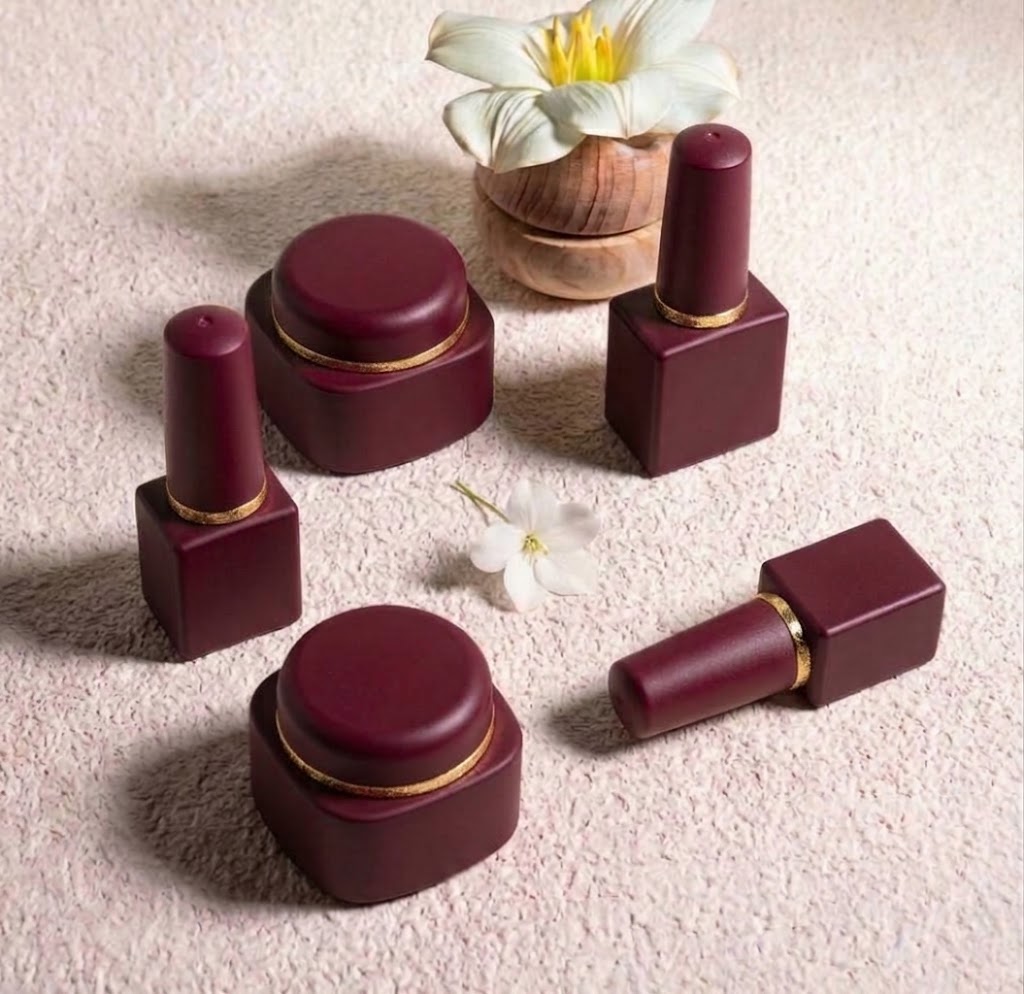
Nail colour and gel systems have their own specification logic, and it is stricter than most skincare briefs. The formula is solvent-heavy, so neck and liner compatibility decide whether a bottle leaks or evaporates over a 24-month shelf life; the brush determines the application experience as much as the colour does; and the cap is the brand’s largest printable surface.
The category has also moved toward systems rather than single SKUs: a UV gel polish bottle sold together with a builder-gel jar, matched in colour and finish, is now a standard retail unit. Square glass bottles at 10 ml remain the reference format, with round and shaped glass for premium tiers and plastic bottles for value and travel sizes.
8. Hair and body care: the jumbo pump returns
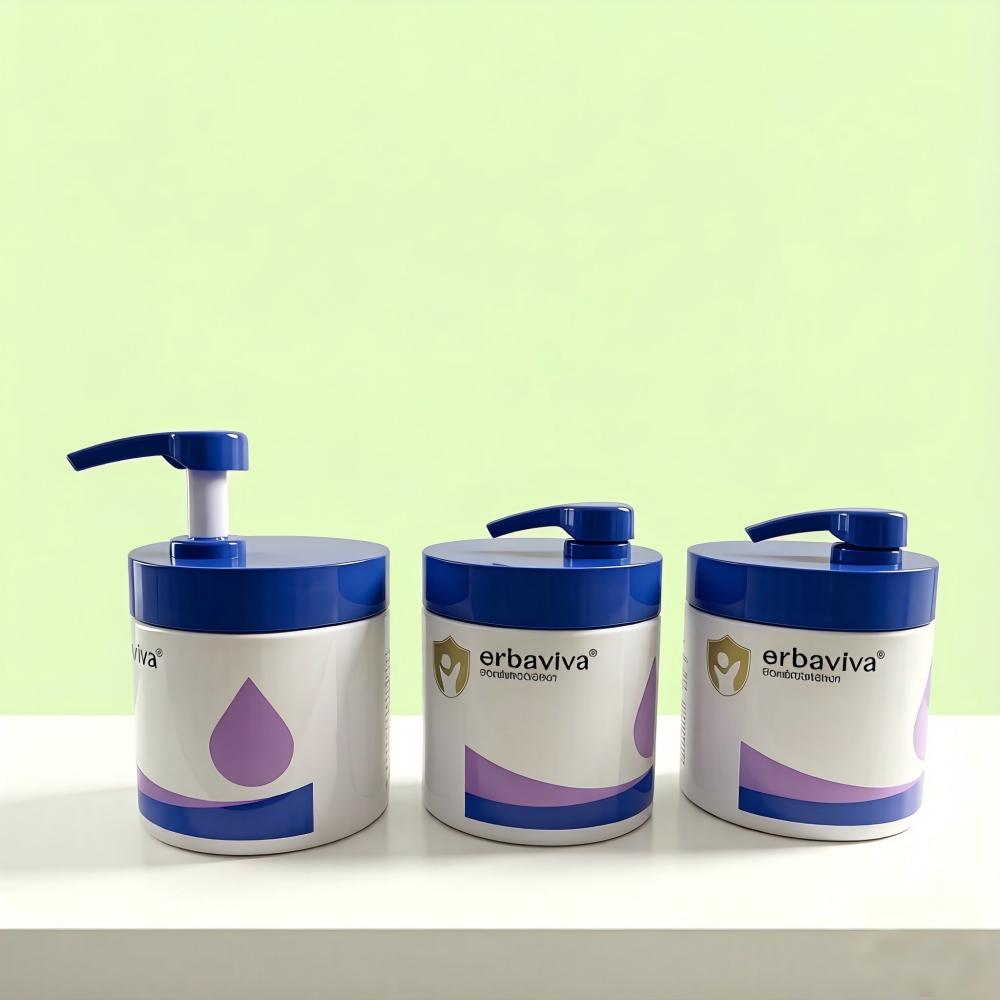
Shampoo, conditioner, body wash and lotion have shifted toward larger fills and refill logic. Wide-mouth 250 ml and 500 ml PET pumps are the volume format of the category because they handle high-viscosity, sulfate-free and surfactant-heavy formulas without a narrow-neck filling bottleneck, and they accept a large-dose pump that delivers a realistic shower dose.
Two specification notes: check the pump’s output per stroke against the recommended dose on the label, and confirm the neck finish supports both a pump for retail and a flip-top or refill cap for travel and refill variants. PCR PET at 30%+ is now routinely available in this format, with the caveat that colour consistency must be agreed in writing.
9. Specification matrix: matching format to formula
| Format | Best for | Common fills in our range | Specification checkpoint |
|---|---|---|---|
| Airless pump bottle | Serums, retinol, vitamin C, preservative-reduced emulsions | 15 / 30 / 50 ml | Dose per stroke, evacuation rate, all-plastic pump option |
| Airless jar | Creams, gel-creams, thick textures | 15–50 ml | Plate travel and fill line, refill inner availability |
| Dual-chamber jar or bottle | A/B actives, two-texture products, mask sets | Confirmed per mould | Chamber ratio, co-dispense head, single-polymer body |
| Glass dropper or lotion bottle | Premium serums, facial oils, treatment essences | 30 / 50 ml and above | Pipette dose accuracy, neck finish, refill compatibility |
| Wide-mouth PET pump | Shampoo, conditioner, body wash, lotion | 250 / 500 ml | Output per stroke, PCR consistency, refill cap fit |
| Glass nail polish bottle + gel jar | Gel colour, builder gel, nail care systems | 10 ml reference format | Solvent-resistant liner, brush geometry, cap print area |
10. Decoration: the 20% of the pack that carries the brand
Format wins the brief; decoration wins the shelf. The finishes that convert in 2027 are the ones that can be applied without destroying the recyclability grade: direct silk screen and pad printing, hot stamping on a compatible substrate, soft-touch matte lacquer, and full-body UV gloss over a solid colour. Metallisation and multi-layer sleeves still deliver the most dramatic effect, but they are increasingly specified as decoration on a separable component rather than on the primary body.
For nail and lip categories, the cap is the hero surface — colour-matched, sometimes magnetised or weighted, and usually the most expensive component per gram. Treat cap tooling as part of the brand asset, not as an accessory purchase.
11. How to brief a packaging supplier in 2027
A brief that produces a usable quotation in one round contains seven things:
- Formula profile — pH, solvent content, viscosity, actives, preservative strategy.
- Fill volume and dose — nominal fill, headspace, intended dose per use.
- Target market — EU, US, UK, Middle East or domestic; this decides which compliance documents are required.
- Recyclability and PCR targets — the grade you need to reach and the recycled percentage per format.
- Decoration and artwork — print method, colours, dieline, and whether the surface will be recycled substrate.
- Volumes and phasing — launch quantity, refill quantity, and whether a custom mould is justified.
- Testing expectations — compatibility, drop, leakage, evaporation and transport testing.
12. FAQ: cosmetic packaging in 2027
What is the most requested cosmetic packaging format for 2027?
Airless pump bottles in the 15–50 ml range, driven by active-heavy serums and preservative-reduced formulas. Refillable airless and mono-material PP formats are the fastest-growing sub-segment.
Does airless packaging really extend shelf life?
It removes two of the main degradation routes — oxygen ingress and microbial back-contamination — because the product is dispensed without air returning to the chamber. The gain depends on the formula and the pack’s evacuation performance, so compatibility testing remains necessary.
What recycled content do I need for the EU market?
It depends on the packaging category. Thresholds phase in from 1 January 2030 (or three years after the relevant implementing act) and rise in 2040, ranging from 10% for some contact-sensitive plastics to 35% for other plastic packaging. Percentages are calculated per packaging type and format, as an annual average per plant.
Is glass better than plastic under the PPWR?
Glass is permanently recyclable in established streams, but it is heavy to transport and still subject to minimisation rules. The regulation rewards design for recycling, not a material choice in isolation — a mono-material PP pack with documented PCR can outperform a heavy glass pack on both grade and carbon.
What is the standard fill size for nail gel packaging?
10 ml glass bottles remain the reference for UV gel polish, with 5 ml for sample and travel sizes and 15–30 g jars for builder and hard gels. Solvent resistance of the neck liner is the specification that decides shelf life.
How do I start a custom packaging project?
Send the formula profile, fill volume, decoration direction and target market. A supplier can then propose an existing mould, a mould modification, or a new tool — and tell you which of the three actually meets the 2030 recyclability target.
About Duanny Cosmetic Packaging
Duanny Cosmetic Packaging Group has designed and manufactured cosmetic packaging since 2010, through Duanny (Beijing) International Trading Co., Ltd., Yuyao Duanny Plastic Factory and Duanny Industry Co., Limited. The range covers skincare, body care, hair care and nail beauty: airless bottles and jars, lotion bottles, cream jars, cream tubes, dropper bottles, nail gel containers, and eco formats built on PCR, refill and mono-material design.
If you are specifying a 2027 launch against a 2030 deadline, send us your brief — or browse skin care packaging, eco packaging and nail polish bottles.
PCR Packaging in 2026: From Claim to Specification